


Deadheading Roses: A 15-Minute Task That Keeps Your Roses Blooming

If your roses gave you a beautiful flush of blooms at the start of spring and now they’re looking a little tired, this is your sign to grab your pruners. Deadheading sounds fancy, but it’s simply the process of removing spent blooms so your rose can focus its energy on producing new flowers instead of forming seed pods (aka rose hips). It is one of the easiest maintenance tasks you can do and it makes a huge difference in how your roses perform through late spring, summer, and into fall.
What Is Deadheading?
When a rose bloom starts dropping petals, fading, and browning, the plant begins shifting energy toward seed production. That’s great if you want rose hips, but if you want more blooms, deadheading redirects that energy back into flower production.
Think of it as telling your rose: "We’re not done yet. We're not ready for seeds yet. Keep the show going and give me more flowers."
Many repeat-blooming roses like Knock Out roses, Drift roses, floribunda roses, and hybrid teas especially benefit from regular deadheading.
When Should You Deadhead Roses?
The best time to deadhead is when blooms start looking past their prime:
Petals are falling off
Flowers are turning brown
Blooms look wilted
The flower is beginning to form a seed head
In Texas gardens, this often means regular deadheading from late spring through early fall.
If you're gardening in East Texas, keep an eye on extreme summer heat because during periods of intense heat and stress, your roses may naturally slow blooming. The good news is, once the cool fall weather kicks in, you usually get another round of beautiful blooms.
How to Deadhead Roses Properly
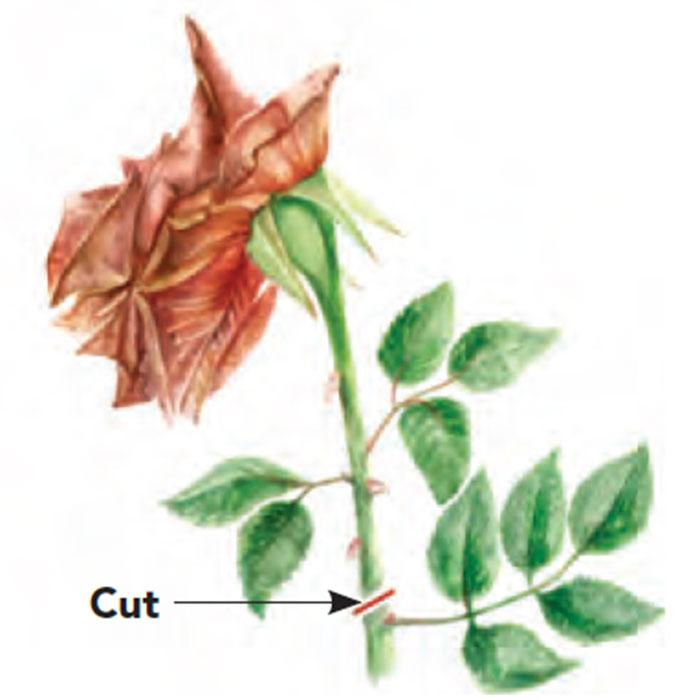
Step 1: Find the spent bloom
Look for flowers that are fading or fully spent.
Step 2: Follow the stem down
Trace the stem down until you find the first set of healthy leaves with five leaflets. This is typically where you’ll want to cut.
Step 3: Make your cut
Cut about ¼ inch above that leaf set at a 45-degree angle. This encourages healthy new growth and helps maintain the shape of the plant.
Step 4: Clean up debris
Remove fallen petals or diseased leaves from around the base of the plant to help prevent fungal issues.
Roses You Should Not Deadhead Often
Some roses are once-bloomers and only bloom once per season. Others are grown specifically for their rose hips. These types may not need frequent deadheading.
Examples include:
Lady Banks' Rose
Peggy Martin Roses
Antique climbing roses
Rugosa roses grown for hips
Tools You’ll Need
Keep it simple:
Sharp bypass pruners
Gardening gloves
A small bucket or garden bag for cleanup
Disinfectant solution (to clean your pruners once you're done)
Common Deadheading Mistakes
Cutting too high
Snipping just below the flower may leave awkward stems and weaker regrowth.
Using dull pruners
This can crush stems instead of making clean cuts.
Deadheading stressed roses
If your roses are severely heat-stressed or drought-stressed, focus on watering first.
Ignoring disease
Always remove diseased blooms and leaves promptly. Clean pruners between plants if you’re dealing with disease issues like Black Spot or powdery mildew.
Bonus Tip: Feed After a Big Bloom Cycle
After a heavy flush of blooms, consider fertilizing with a balanced rose fertilizer to encourage another round of flowers. Products from brands like Vital Earth, Espoma or Jobe's are commonly used by home gardeners. Be sure to water deeply after feeding.
Final Thoughts
Deadheading roses can get a little prickly, but it’s just one of those small garden habits that pays off big. 15 minutes with your pruners can mean weeks of extra blooms.
For more info on rose care, check out our Field Notes on Roses.



Comments